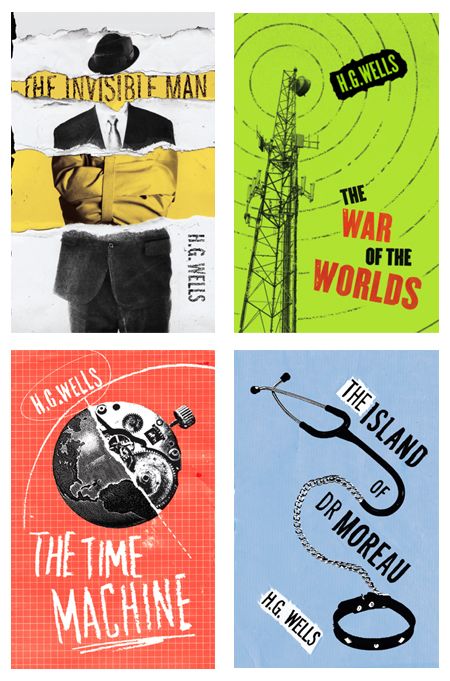
Existing Book covers

A crucial part of research is to see what is already out there on the covers of HG Wells books and to also see what the competing book titles are.

During an afternoon shopping sesh I decided to look in my local bookshop and see if I could find any of his books! I did! – only 2 though; both war of the worlds. I actually bought one so that I could dip in and out and read parts to maybe inspire me! The cover design on it though is not particularly inspiring or innovating! I then also decided to view some of the books sitting alongside it and see what it was competing against.
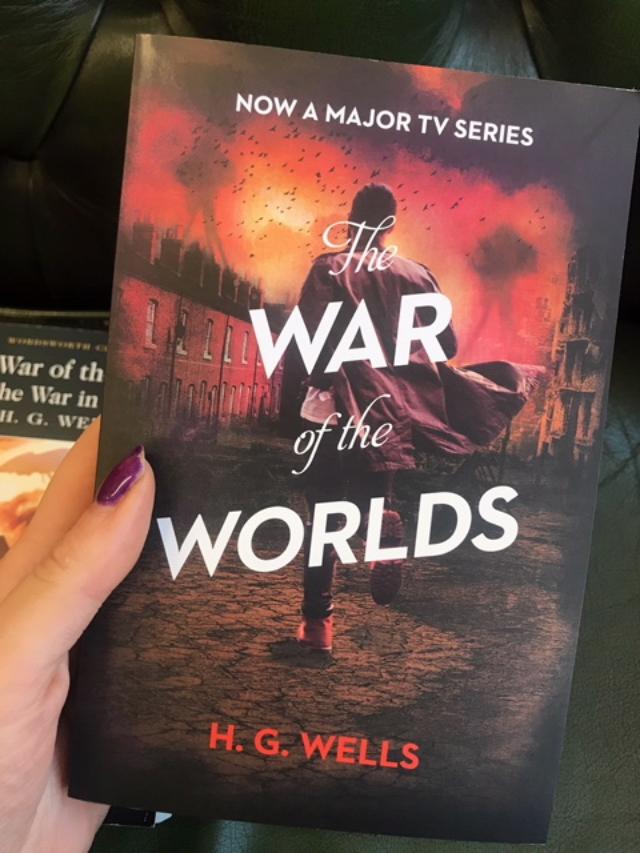
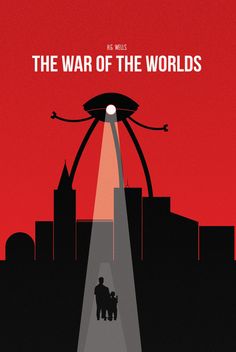
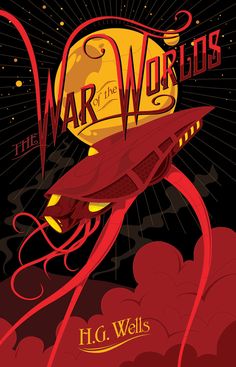
The copies of HG Wells The war of the worlds that I found did not inspire me much… The copy that I bought is a very simple cover. It uses just one illustration, a basic layout and very simple typography, (serif font). The book looks as though it is designed on a low budget. The book can not be aged though looking how it does. The other copy is slightly better but it still not depict the war of the worlds in a way in which I think it should. Again, it uses an illustration which shows the war happening. The use of colours in the illustration really give you a mood for what the feelings and the story might be. The use of red brings about danger, fire and mayhem. It uses a mixture of sans serif and serif script type for the title, I think that this is to give contrast and to make WAR and WORLD stand out. The script font is possibly in reference to the fact that the story is old. The illustration does most of the talking about what the book might be about, you buy into the book because of the illustration.
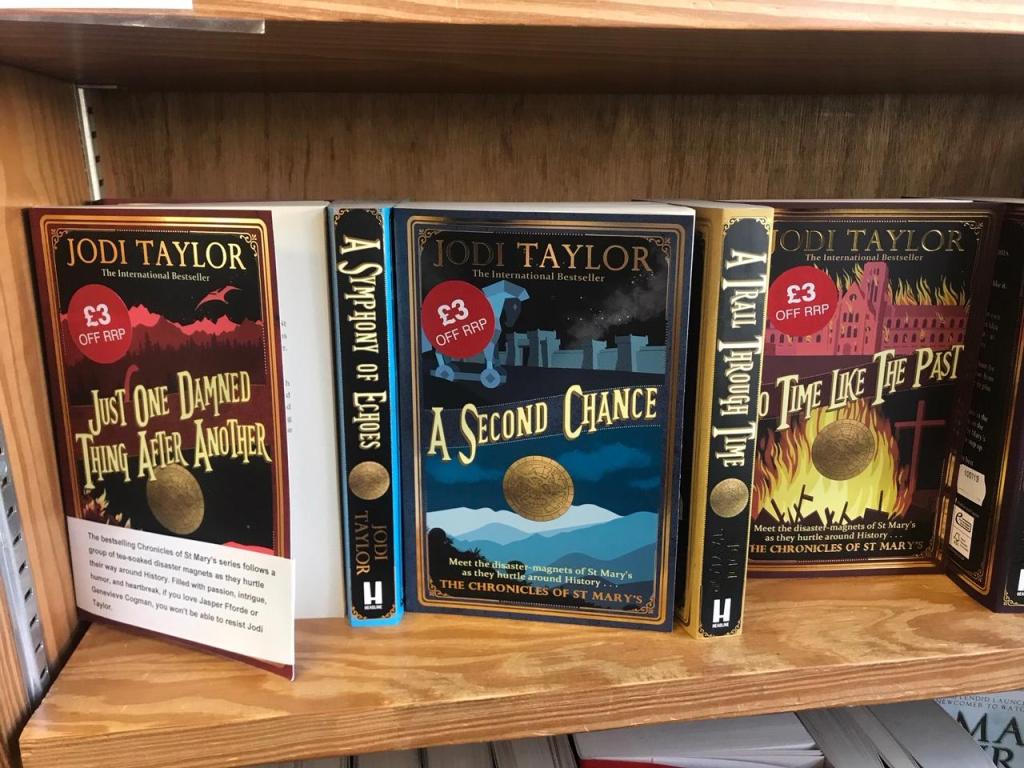
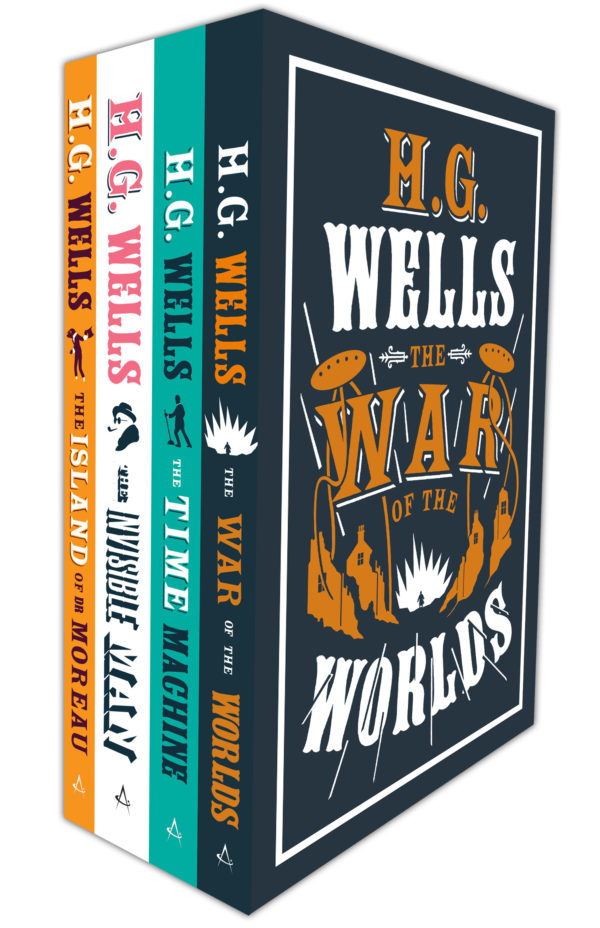
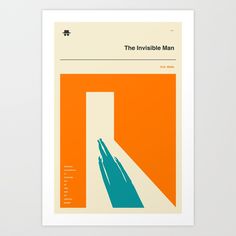
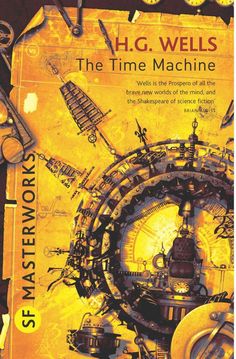
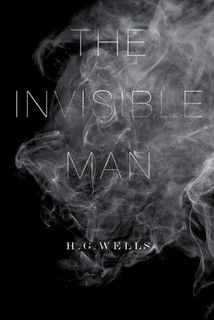
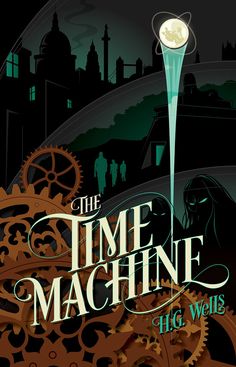
The photos above were sat alongside The war of the worlds. These show a set of 3 books. There is repetition in the designs; the typography, the layout and they all use 2 colours. They are bold, modern and stand out. These are more what I would have had in mind for HG Wells books. The style of writing and the typography they have used is like modern vintage, it is in an old style but made modern by the use of colour and placement on the cover. You can see that the books obviously follow on from each other.

  • Same colours used on each
  • vibrant colours
  • modern
  • Same page layout
  • Author at the top of the cover
  • Same image used on all three
  • Same typography and same layout
  • same ornate border around all 3

I then also remembered the fact that my dad left all his vinyl records at my house when him and my mum split… one of those was the war of the worlds soundtrack. I dug it out just to see what the cover of that looked like.
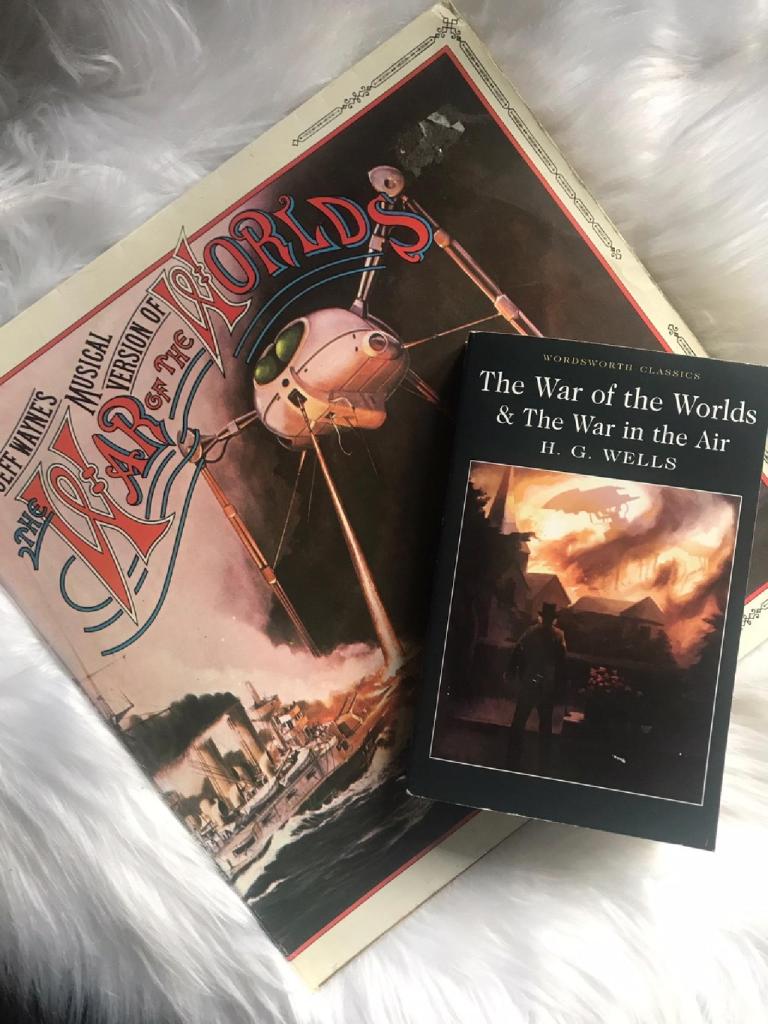
photographed beautifully on my faux fur throw! ;p

Although this vinyl record is not a book cover, it definitely works. The typeface matches the era of the story but also ties in well with the main image, there is movement. The image used gets your imagination working and entices you in to learn more. The illustration depicts a scene from the book where they are trying to escape down the Thames in a boat.

I then decided to search the internet for images of his book covers:

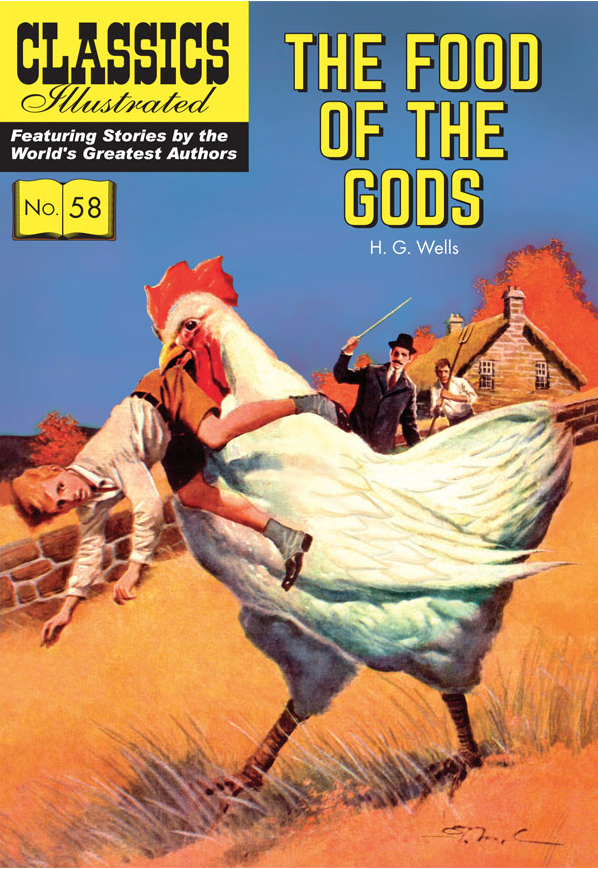
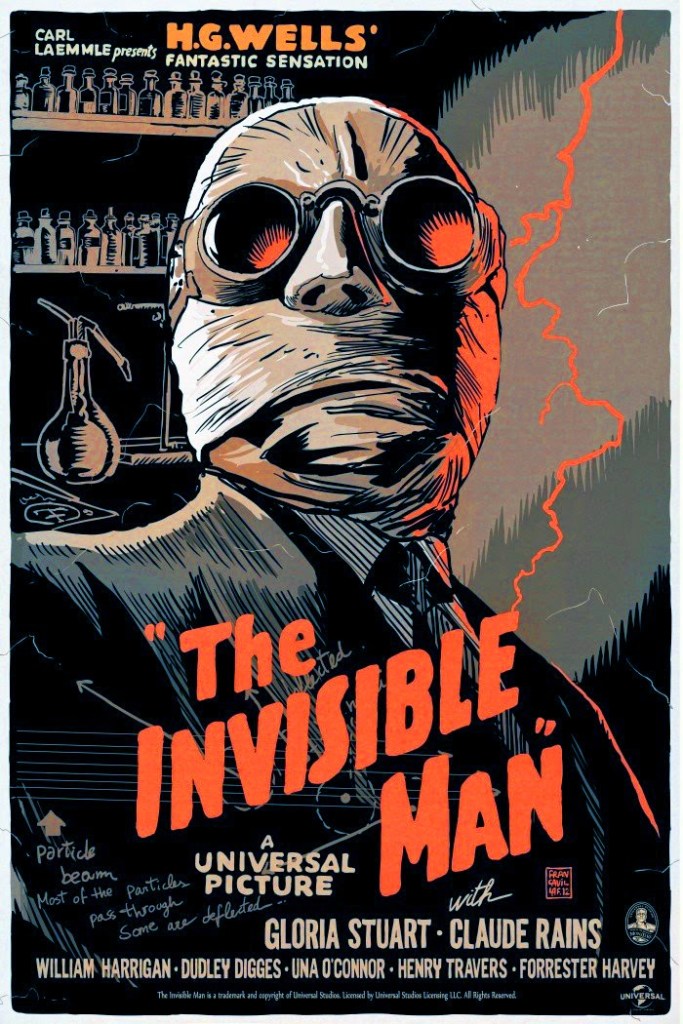
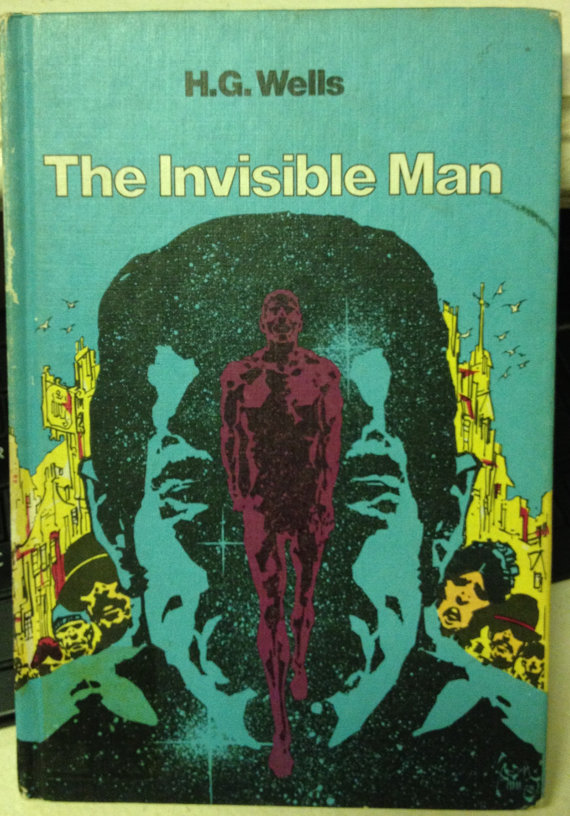
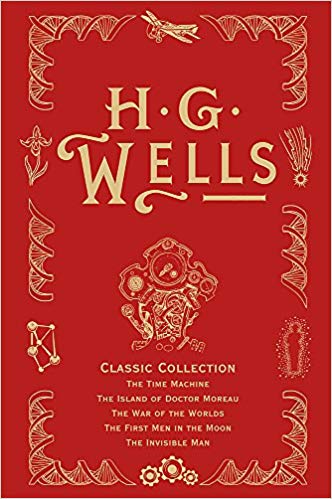
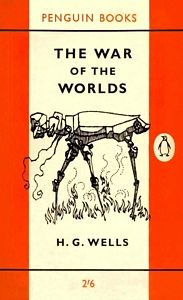
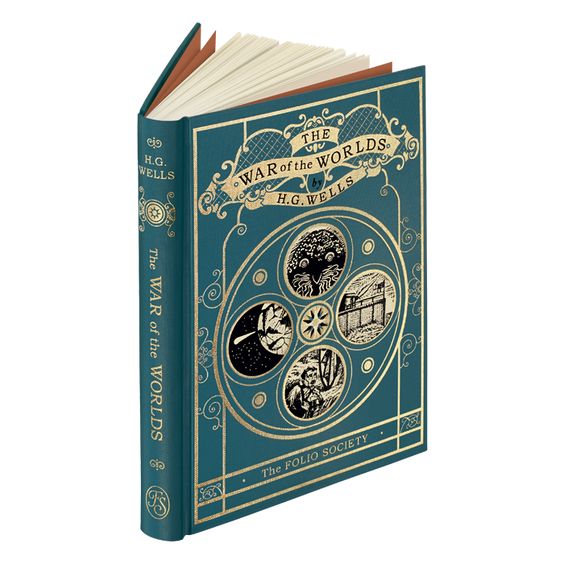
A lot of these covers are really old fashioned. I think that most were designed possibly in the 60s through to the late 70s judging by the artwork, the colours and the typography used. There are some hardback editions in here which I know are not relevant as the brief states paperback, but I like the intricate, detail on them. The use of the gold on the front really makes the piece a work of art. It looks expensive and timeless. There is a penguin edition of War of the worlds in there which has a sketch line drawing of what appears to be an alien, it reminded me maybe of the sketches that HG Wells would have drawn onto the pages of his diary (as I found out in my research about him).

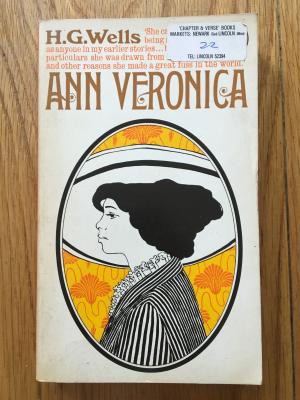
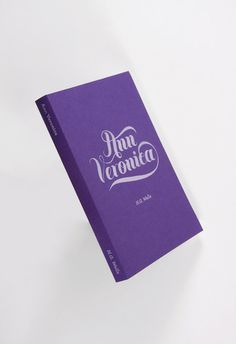
I want to look more into book covers for Ann Veronica as I felt there was not great deal of exciting covers for this one! One of the ones I found which is featured above uses what looks like very Art Deco typography. The typography is possibly a little early for the time the book went to publish.. I always believe Art Deco to be from 1920s onwards. Ann Veronica went to print in 1909. When I think of Ann Veronica I think of Mary Poppins because it is a similar time to when this story is set with the suffragette women!

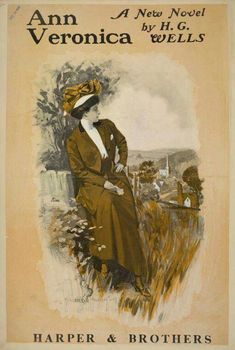
I did however find this poster, I took inspiration from the illustration mostly! It is in a modern yet vintage illustrative style, it reminds me of the illustrations that were popular and widely used in the 1960s.

I am still not a fan of the style of typography used but it shows how you can bring Ann Veronica into today without making her appear stuffy and old fashioned! (From what I believe of the story she is supposed to be young and rebellious!) The text is warped and twisted, I think that this is supposed to look like her high neck and shoulders. The main body text narrows in to create what I interpret to be her small nipped in waist. I wouldn’t say though that it is the nicest of layouts to look at. My eyes are taken everywhere and it is not particularly comfortable to read.

I think the next steps are to decide what books I want to design covers for, research more into the stories and pick out key ideas that I could use in the designs. I need to look more into the the Art and design eras from around the time period the books were published too. I want to make a link between “then and now” and make my designs “modern vintage”.

Book Cover Design: Who was HG Wells?

As I stated on the introductory page explaining the brief; I am totally unfamiliar with the works of HG Wells. My first steps were to read up a bit about him and find out who he was and what kind of stuff he wrote!

The only title I was familiar with is War of the worlds. Growing up, my dad listened to the soundtrack music to this title (I will explain that a bit more later!) and as a youngster I used to play the piano, one of my exam pieces was to actually play War of the worlds! I know the story is to do with aliens taking over earth etc but apart from that I couldn’t tell you a lot else!

Who was HG Wells?

So.. HG Wells, otherwise known as the “father of science fiction” was an English writer born on September 21st 1866. He wrote several titles many being science fiction but some being social novels which still have relevance today. He was a novelist, teacher, historian and journalist. Wells influenced the exploration of Mars so much so that a crater on the surface of the planet was named after him.

He was a futurist, (which may help me in my designs moving forwards with a futurism influence) he liked to try and predict coming events and possibilities for the future of the earth. He liked writing about recreational war games which then developed into tales about alien abductions and aliens taking over the earth. His science fiction imagined time travel, alien invasion, invisibility, and biological engineering.

His most famous works were The war of the worlds (1898), The time machine (1895) The invisible man (1897) and The war in the air (1907). HG Wells was nominated for the Nobel Prize in literature 4 times.

HG Wells specialised in Biology. His logic and thinking was influenced largely by Darwin. He was also an outspoken socialist and had pacifist views during the first world war. His later works were extremely political. This can be shown in Ann Veronica. He also made reference to lower middle class life with “Kipps” and “The history of Mr Polly”.

Growing up for Wells was a trying time, his parents struggled financially and due to work commitments spent much time apart. As money was short they sent Wells off to become an apprentice draper where he worked 13 hour long days and slept in a dormitory with other apprentices. This would later inspire “Kipp” “The history of Mr Polly” and “The wheels of chance”. He was noticing how wealth and money was distributed along the classes.

He then managed to secure (through the help of his mum) a pupil-teacher position which allowed him to assist in the teaching of younger students. He carried on studying and gained his BA Science degree. When he left school he had no money and went to live with his Aunt, it was while he was there that he took interest in his cousin called Isabel. He later married her but divorced 3 years later. It was around this time he published his first novel “The time machine”.

HG Wells seemed to like the ladies, he remarried again to one of his old students who he fondly named “Jane”. He however had many affairs with many different women he met on his life journey. Some of these women were teachers, feminists and activists.

Wells had a like for art and expressed himself through little drawings and sketches that he would draw on endpapers and pages of his own diaries. They covered a variety of subjects such as politics, literacy and is romantic interests. In 2006 a book was published on “pishuas” which is the name he gave to the drawings he drew about his second wife Amy Catherine (Jane).

HG Wells was also good friends with Winston Churchill up until his death, Churchhill used a line from War of the worlds in one of his speeches about the rise of the Nazis “the gathering storm” he was a big fan of Wells books.

In his last book “Mind at the end of its tether” (1945), he considered the idea that humanity being replaced by another species might not be a bad idea. He referred to the era between the two World Wars as “The Age of Frustration”

Wells died aged 79 on the 13th August 1946 in Regents Park, London from unknown causes.

List of HG Wells fiction novels:

  • The Time Machine (1895)
  • The Wonderful Visit (1895)
  • The Island of Doctor Moreau (1896)
  • The Wheels of Chance (1896)
  • The Invisible Man (1897)
  • The War of the Worlds (1898)
  • When the Sleeper Wakes (1899)
  • Love and Mr Lewisham (1900)
  • The First Men in the Moon (1901)
  • The Sea Lady (1902)
  • The Food of the Gods and How It Came to Earth (1904)
  • Kipps (1905)
  • A Modern Utopia (1905)
  • In the Days of the Comet (1906)
  • The War in the Air (1908)
  • Tono-Bungay (1909)
  • Ann Veronica (1909)
  • The History of Mr Polly (1910)
  • The Sleeper Awakes (1910) – revised edition of When the Sleeper Wakes (1899)
  • The New Machiavelli (1911)
  • Marriage (1912)
  • The Passionate Friends (1913)
  • The Wife of Sir Isaac Harman (1914)
  • The World Set Free (1914)
  • Bealby: A Holiday (1915)
  • Boon (1915) (as Reginald Bliss)
  • The Research Magnificent (1915)
  • Mr Britling Sees It Through (1916)
  • The Soul of a Bishop (1917)
  • Joan and Peter: The Story of an Education (1918)
  • The Undying Fire (1919)
  • The Secret Places of the Heart (1922)
  • Men Like Gods (1923)
  • The Dream (1924)
  • Christina Alberta’s Father (1925)
  • The World of William Clissold (1926)
  • Meanwhile (1927)
  • Mr. Blettsworthy on Rampole Island (1928)
  • The Autocracy of Mr. Parham (1930)
  • The Bulpington of Blup (1932)
  • The Shape of Things to Come (1933)
  • The Croquet Player (1936)
  • Brynhild (1937)
  • Star Begotten (1937)
  • The Camford Visitation (1937)
  • Apropos of Dolores (1938)
  • The Brothers (1938)
  • The Holy Terror (1939)
  • Babes in the Darkling Wood (1940)
  • All Aboard for Ararat (1940)
  • You Can’t Be Too Careful (1941)

Exercise – Book cover design: The Brief

The brief

Your brief is to design a stunning and contemporary cover for one of the 20th century’s most acclaimed authors, HG Wells.

Known mostly for his science fiction writing, HG Wells also wrote social novels that are still relevant today. He covered topics such as the mid-life crisis, class, feminism, materialism, consumerism and love.

Your challenge is to create cover designs for three of his books that work as a set and establish the books as timeless fiction. The books will be published in a paperback format and need to include the title, author’s name, publishers name and trademark. You only need to design the front cover and spine.

Making notes in your learning log:

  • Identify the research you might need to undertake and the gaps in your knowledge. Can you identify any primary research that will help you? What resources could you use to undertake secondary research?
  • Use the mind mapping technique to explore your keywords. Explore both extremes of obvious and radical solutions to the brief. What is the most obvious way of responding to it and what radical creative solutions can you come up with?

How do I feel about this brief?

When I first sat down and read this brief my original thoughts were that it is well out of my comfort zone and that I had absolutely never heard of the author in my life! I have obviously heard of War of the Worlds but apart from that I was absolutely clueless! I do not read much myself (apart from design books and magazines) and the fact that the books are from the late 18th century- early 1900s put me off as my initial thought is that they would be outdated, old fashioned and written in “old English” (the grammar would be old words!) and not with the present times now at all.

I have already conducted a bit of research before going into too much yet. My first questions to myself were “Who is this guy? and what books did he write?”

I looked into the obvious being – The war of the worlds, Invisible man and The Time Machine. Having also looking at what other students on my course are doing, most of them have looked into the same books. Me being typical me :p felt like I need to step outside of my comfort zone and look into other publications. I have looked at a few titles such as Ann Veronica and The history of Mr Polly and have read a few pages of each to get a feel for the style of writing, the era and the stories.

I have also brainstormed ideas to give me direction for my next moves around this brief.

Research I shall undertake:

  • Gaps in my knowledge: Research more into HG Wells. His history and background might help me in the style of my design outcomes.
  • Research into HG Wells titles: What books did he write? What eras are they from? What are the stories and what subjects do they explore?
  • What are the art and design movements of the time the books were published?
  • What typography was being used around the time the books were published?
  • What book covers are being used on present day HG Wells titles?
  • What typography is being used on present day covers?
  • Who reads HG Wells titles? Who or what are the target audience for these books?
  • Who designed the covers for his existing books?
  • Who published his work?

What primary research can I conduct?

  • Take my own photographs of existing books and book covers to get an idea of what designs are currently being used
  • Interviews with people who are interested in his work to see what they would want to see on his book cover designs
  • Research into other competing titles; what designs do they have which makes them appealing. How are they a threat to HG Wells titles?
  • Research into modern titles of the same genre of book

What secondary research can I conduct?

  • Search the internet for HG Wells info, bio, book list, plot of books etc
  • Reading the books
  • Watching film adaptations
  • Research into contemporary/modern design
  • Research into design eras around the time of the book publication dates.
  • Research into typography from the dates of the book publications and also look into modern contemporary typography of today.

What restrictions or implications do I need to take into account?

  • Cost factors; Restriction of colours to keep printing costs down, what materials are being used? What weight/quality of paper/card?
  • What is the size of the book that I am designing for? What is the standard size of a paperback novel?
  • How many pages does the book have? – this might deterine how big the spine of the book is.