The original drawing – I might change the tattoos to represent more girl power, empowerment and independence.
work in progress!
I have started designing postcard 2. I took my initial drawing and again imported it into Illustrator and started to draw around it using the pencil tool and the pen tool.
I want all 3 postcards to work together and to show consistency. They all need to be similar layout, have the same negative space, similar colours and use the “Lost Angeleno” logo illustration somewhere so that all 3 relate to each other. If my postcards were to be mixed up with 100’s of other postcards I want mine to be recognisable that they all belong together as a series.
I have started with the black background on here like the first postcard, I shall also add the neon glow effect around the outline of the body. I shall use the “Angeleno” logo I used in my first postcard but possibly change the name of it to tie in to the theme of this postcard. This postcard is to represent girl power, independence and being strong and empowered, so I shall possibly use a name to represent this, for example; “Independent Angeleno”.
I need to look at the proportions of the body. I feel that the arm on her at the moment looks too chunky… I need to line it up however so that it fits together with postcard 1 as they join up.
To learn more about type and its history I decided to watch a film called Typeface. Typeface is centered around Hamilton Type Museum in Wisconsin and tells the history about American wood Type (letterpress).
I am familiar with letterpress but never actually knew what was involved with it or how it technically worked. This film goes through the whole process of letterpress from beginning to end; from cutting and carefully carving and measuring the blocks to actually storing them and filing each alphabet of blocks away carefully to how the letterpress actually works in the machines. It reminds me a lot of screenprinting. The machines have rollers which paint is squeezed onto; very simialr to a squeegee in screen print. Every piece done by a letterpress is unique and different and has “flaws”. One of the designers on the film states that you can try and get a scratched effect on Illustrator or Photoshop but it just isn’t as good as the actual flaws and scratches created by a letterpress.
I learned an interesting fact though; The saying “Mind your p’s and q’s” originates from letterpress! On the letter plates the P and Q are on opposite sides and very often people would get them confused with one another!
There was a university lecturer who featured on this film, he was a massive fan of letterpress and believed that all his students should see how old type was made to fully appreciate type now in modern times. He showed some of his work on this film and it was basically him using very vibrant neon colours and him just layering up type. The overall finish was very effective and it made me think that I could trial something similar maybe in a future assignment. Even just to create something letterpress to then import into Illustrator and Photoshop would still show different skills.
Today I have been messing around with the type for the front of Postcard 1.
I originally had the idea of “Graphically Pink” dripping down the arm but started experimenting with other ideas…
I figured that the pinkness of the overall image is actually quite obvious, I feel that when you look at the image you automatically see a love of pink and lipstick, the need for “Graphically Pink” in writing possibly isn’t needed. The colours are vibrant and I am hoping the overall image explains itself! I then went on to thinking about linking the 3 postcards as a series… I wanted some kind of logo or writing on this postcard; Ideally I wanted something that I could link all 3 with. The only other idea I have is the “Lost Angeleno” design that I did from my learning log sketchbook. I took that drawing and imported it into Illustrator and traced around it to create “Lost Angeleno” I then decided that I wanted to save the “Lost Angeleno” mainly for the LA inspired third postcard… I want to however link all 3 postcards with the same concept so started thinking of new ways to incorporate maybe just the “Angeleno” part on all 3 postcards. This first postcard represents pink so I decided on “Pink Angeleno” the second postcard shall incorporate the name “Angeleno” somehow and the third postcard shall be “Lost Angeleno”. They then all become part of the “Angeleno” series. The woman in my illustration shall be known as “Angeleno” as a whole.
What I am trying to create is a brand for these postcards; when you put them together you know they belong together and a theme runs throughout consistently.
The original “Lost Angeleno” sketch from my learning log sketchbookBeing digitally drawn using IllustratorWhat I have so far…
I wanted the writing on the first postcard to look like it was dripping with the melted lipstick. I watched a few Illustrator tutorials and read tips and advice and decided on creating this one. I quite like how it has turned out. It is still hand drawn from my original sketch but it has been further digitally created and altered to tie in with the theme of postcard 1. I feel I am gaining new skills and growing in confidence with creating in digital again.
i AM SO EXCITED FOR THIS POST! I know!…. I really do live a sad life! 😛 I do love stumbling across acidental design gems though and I feel like this might be one of them!….
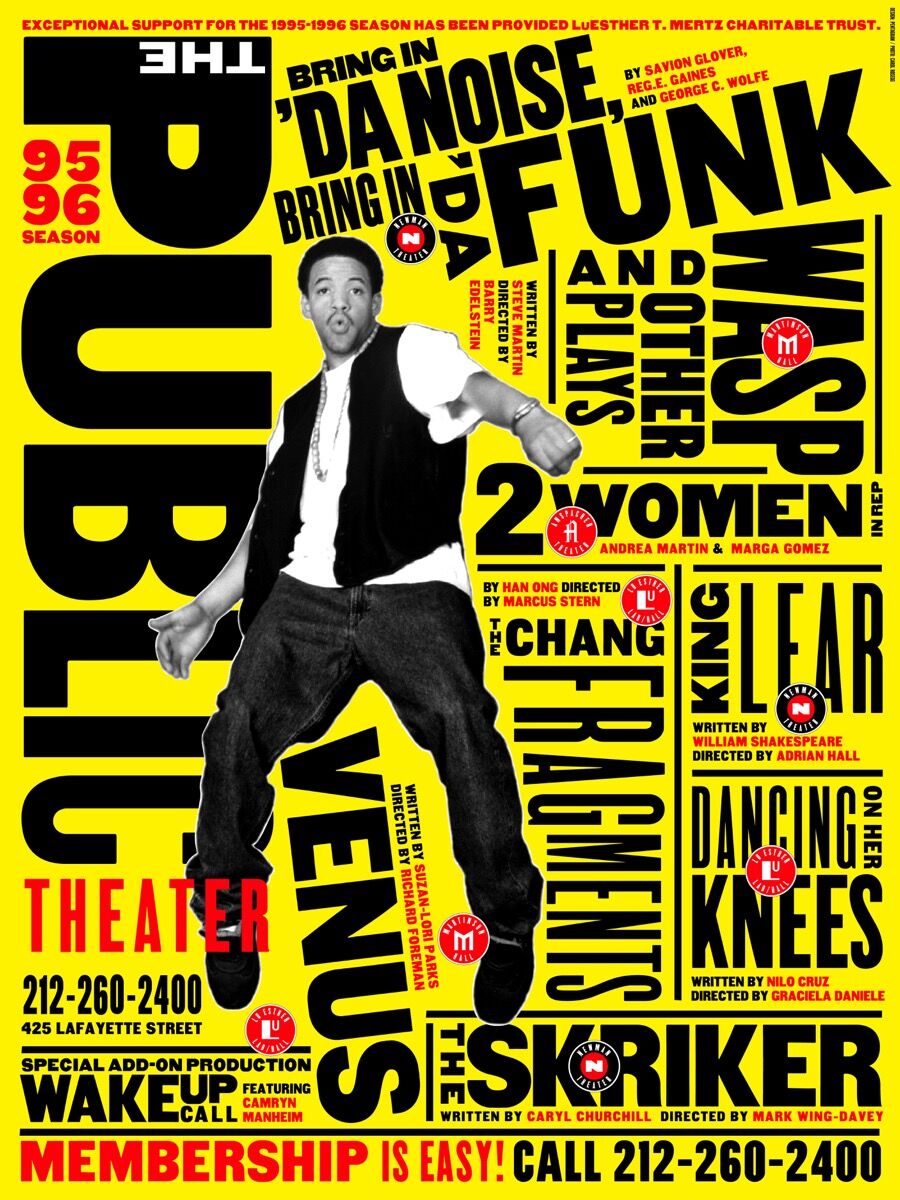
I was writing my post for my “Netflix, Design and Chill” section of my blog about the Abstract Documentary featuring Paula Scher and Pentagram when I accidentally stumbled across something interesting as part of my research for assignment 1!
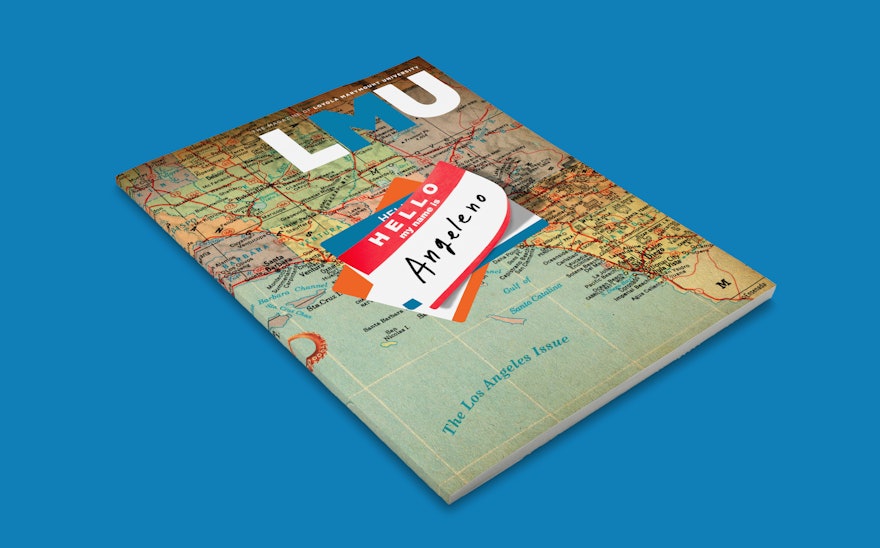
Trying to find a decent image to upload to my blog post about Paula Scher led me to her Pentagram design agency website in which there was some of their recent work uploaded to the home page; one of Pentagrams clients is a Catholic University in Los Angeles called Loyola Marymount University and their publication called LMU Magazine. LMU have been completely rebranded by Pentagram and their relaunch issue “The Los Angeles Edition” is EVERYTHING relating to my design ideas around the “Los Angelenos”
….(I can’t help but feel a bit smug that my mind obviously works in a similar way to the great Scher and Pentagram! :P)….
The idea and concept, the images used and the way in which they are used to link to the articles and cleverly communicate a message. It really stands out to me. The layout is also flawless. The content of the magazine obviously also looks very educational and interesting and completely relates to my interest of LA, the history, the locals, the arts and surrounding area.
So.. I have emailed LMU very nicely to see if they might kindly be able to send me a copy all the way across the pond to me! (I know!.. it’s quite a long way!) I eagerly await their response!
Here are a few snippets of the articles I found online.. the layout and images used!
This is a very similar idea to what I have in my design ideas! – I have used the map to portray Los Angeles and also played with the Los Angeleno idea. I like how this is a University magazine which is distributed to students and they have used that as part of the main image. Freshers at Uni would be given name tags on their first days so that people can remember their names; this is a name badge for “Angeleno” it gives me a sense that it is about “belonging” although the students are all new to each other they all belong to Los Angeles as Angelenos. It is showing to me a hello, welcome and you are now a part of LA. The way “The Los Angeles Edition” has been incorporated into the design is also very clever – Following Schers love of maps this has been incorporated into how seas would be written on maps.This to me is clever!.. I was drawn to this image anyway because I have a love for old type and typewriters (I own a vintage one at home I always say one day I will include in my designs!) but this image relates so well to the content it is communicating. The article that this image relates to talks about the history behind Los Angeles, the name “Angeleno” and how it was written and typed in the past. The accent on Angeleno it was believed was a type error. The image here plays on that. The hand is playfully playing with the accent; it can either take it or leave it. Either way its showing human intervention or the “error”. It also highlights homelessness which is something sadly I noticed when I last visited LA. I would be interested in reading his article as it is something that I care for and is close to my heart. I like the images used here also. The images are used to provoke empathy, softness, kindness and care. The type used is handwritten (In style of the homeless people like how they write on their cardboard signs) The letters are cleverly put together in a collage style – Carson springs to mind.
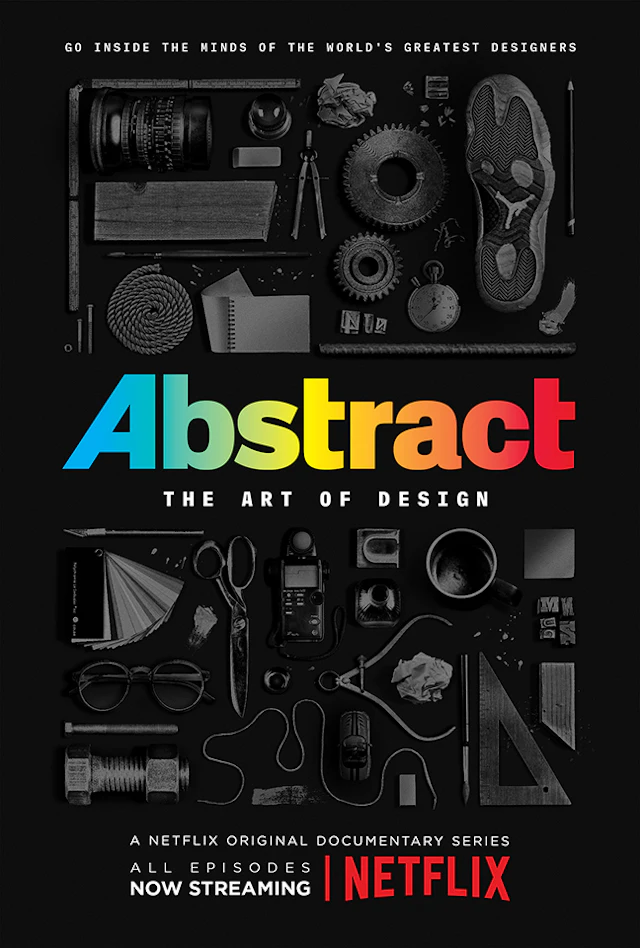
This is a series on Netflix covering a different designer each episode from all different areas of Design and each episode follows their work, their background history and what drives and motivates them.
Episode 6; The one I was most interested in watching was the one featuring Paula Scher an American Graphic Designer who specialises in hand lettering and type. As this is an area I am particularly interested in I decided it was worth a watch as I had never really heard of Paula Scher and her work before.
The episode looks at the influence New York City has had on the designer’s work, her lifelong love of typography, and the map paintings she hand draws and paints alongside her client projects.
I was pleasantly surrpised to see that she is very old school in her designing. My personal style and my strong area has always been hand drawn and more traditional in approach and she was very much the same. Up until watching the documentary I had always worried that to be an amazing designer you need to be a whizz digitally. Schers work started as illustrations and hand drawn sketches which she then imports in and alters digitally.
It was interesting to see how she undergoes projects and how she creatively thinks; I could see many things that I shared in common with her about how I see and view things creatively.
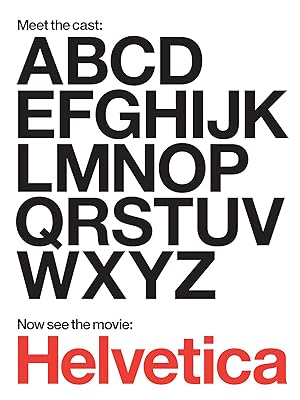
A post appeared on my Facebook news feed of inspiring films for Designers. One of them that was mentioned was Helvetica. I decided to download it on my Amazon prime and give it a watch!
The film consists of interviews from lots of designers from different age ranges and backgrounds giving their opinions on the infamous typeface. The majority of the designers featured in this film use Helvetica religiously within their work and would consist it the best typeface. Most of these designers however I noticed originate as designers from the 1950s onwards and what I would refer to as “old school type” The young blood that they interview such as David Carson rebel against the formalities and the old traditions and reinvent type in a different way.
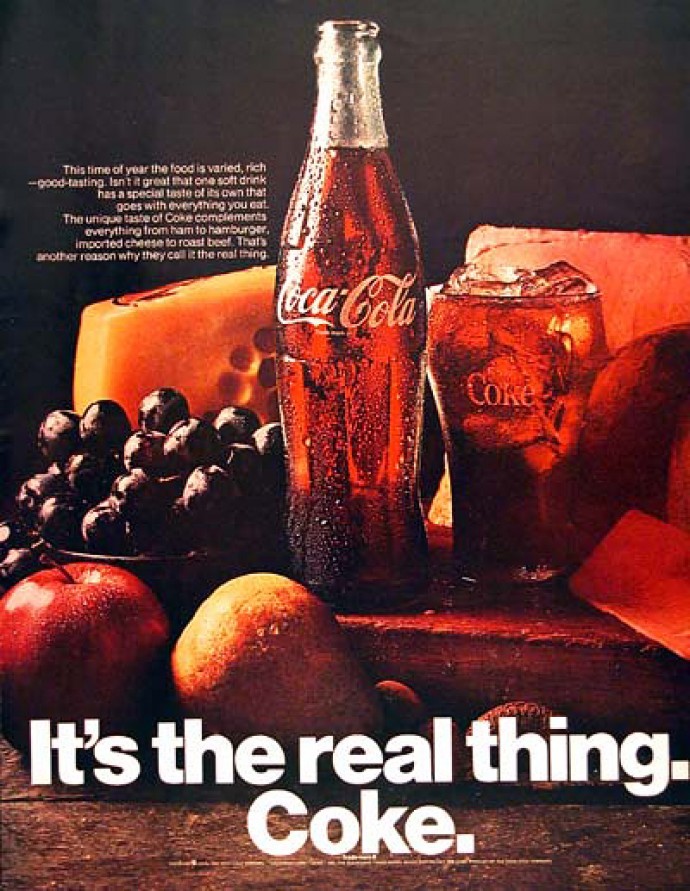
In the 1950s after the war, it brought about the Swiss way of designing! Swiss designers paved the way in type and the general outlook was that type should be simplistic, straight to the point and do what it is simply meant to do; be readable, clear and basic! Helvetica was designed in 1957 purely for just this! – clarity, no meaning to its form and to be used in signage. It became a hallmark for the International Typographic style. The film covers how it started as a typeface, how it changed name and showed many major brands that use it in their branding; There are many diverse brands who use it in very different ways – American Apparel, American Airlines and Coke in one of their early advertisements. Many adverts in the 1950s/60s used very “fun” hand lettered style fonts in their advertisements, it showed how this changed when Coke simply released their advert with a simple image and “It’s the real thing. Coke.” in Helvetica Bold; there is nothing else fancy needed, the typeface speaks for itself – the seriousness and confidence of it simply tells the reader “Drink Coke. End of!”
In Helvetica Bold.
The interview then moves on to some of the more “modern” designers; David Carson being one of the most iconic. He is very humerous in the film by printing out several words in Helvetica and explaining how the typeface does not do the words justice. E.g. Explosive written in Helvetica not looking explosive at all! In the 90s Carson stuck 2 fingers up to the formalities and the traditions of type, took away the mathematical grid systems and basically experimented and rebelled with the image of type. He admits that he had no real training or idea what he was doing and was naive to the fact that he had caused such uproar against the traditionalists and that it just sort of happened how it happened! He brought about Grunge type. He designed a magazine layout for his Ray gun magazine – an interview with Bryan Ferry in which he stated that it was the most boring interview he had ever had to publish or design around and that no one would really care about anything the interview said; messing around with typefaces for the article he came across Dingbats (completely unreadable) but for the impact and the logic he felt behind it he published and designed it his way with that font! He has his own unique, rebelness “careless” way of designing type and this is why his work against the type designers of the Helvetica Swiss era stood out. After the 90s grunge type era had ran its course there was no way to go back to what once was… the traditionalists had to invent new systems.
The Bryan Ferry Interview – Dingbats!
Overall it was a good film showing the importance of Helvetica and how well it does its job as one of the most popular typefaces of all time. It has definitely shown me more how type can have such an impact in your work and how it is seen and “heard”.
So I haven’t updated my blog for a while now… but that doesn’t mean I haven’t been working on my assignment!…
I feel like whoever reads this blog update and is following my progress with my postcards are going to be like “Hurry up and complete it already!!” I seem to have been milking this out for ages! – As I’ve said previously though I struggle with time; I get 2 hours a day max and being a perfectionist mixed with the fact I am trying to relearn skills and learn new ways digitally might slow me down a tad!
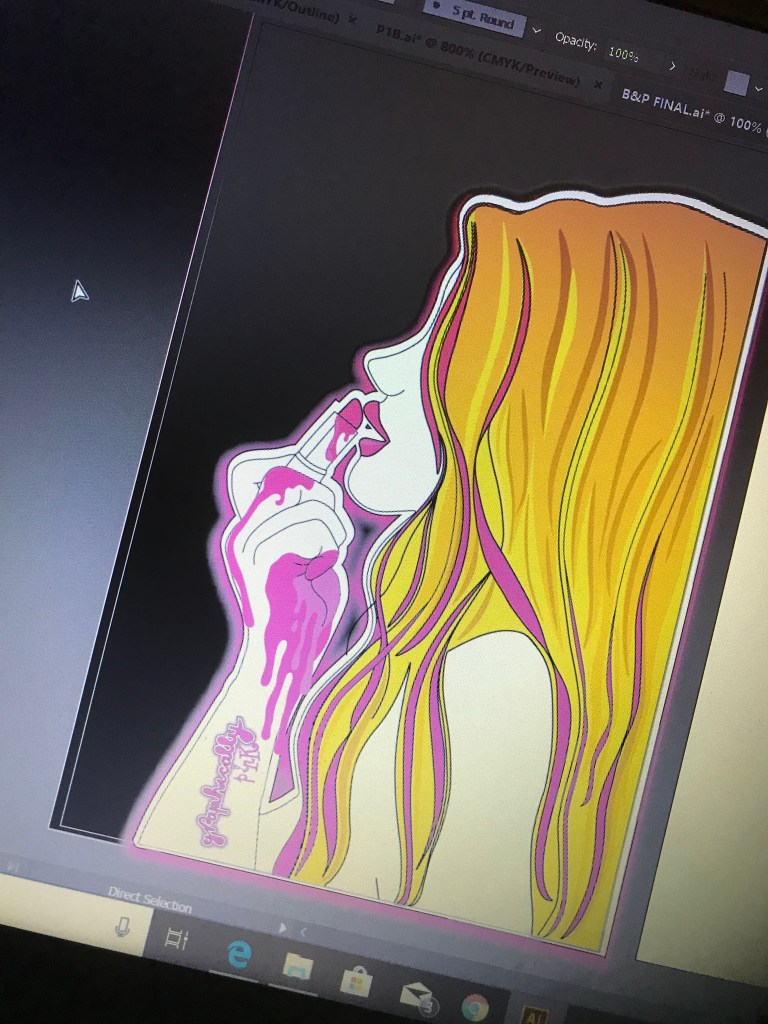
This post shows how I have tweaked the shape of the strands of hair, changed the colours, kept the neon effect and am now messing around with new ways to display the “Graphically Pink” name. I had the idea to drip the lipstick down her arm and potentially have the writing coming from that.
I looked at a tutorial to try and get realistic drip effects. I have started to put this into action as you will see from the image I have uploaded! The next stage is to get the drips exactly as I want them to appear and drip the “Graphically Pink” from them and then work on adding depth to the drips; making them look more realistic by adding effects and blends.
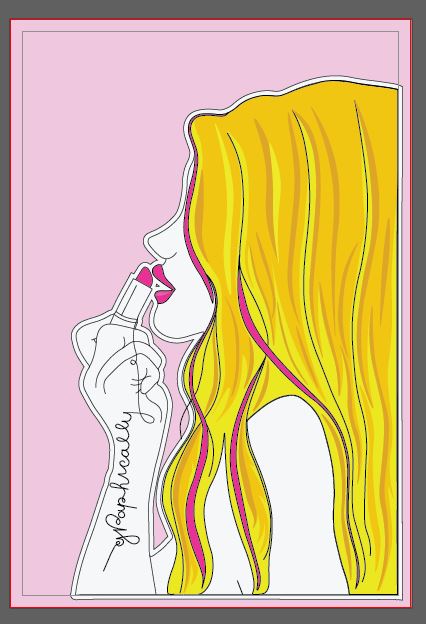
I have drawn out postcard 1 on Illustrator….. The hard task is now deciding how I want it to look and which colour scheme to go with!
I originally stated I wanted the postcards to all be the same colours (Pink, Black and white) and be very simplistic and just simple line drawings. I have now had a rethink about this…
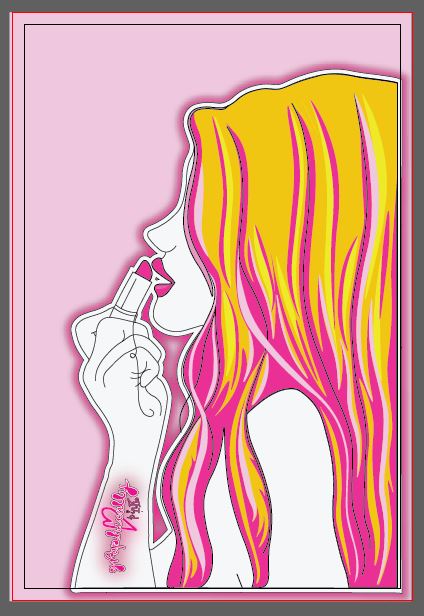
In my learning log sketchbook I collected examples from Paperchase of neon cards that I like the style and look of. I tried to replicate this in my Graphically Pink logo and I have now looked into replicating this for the first postcard. This would be the middle image above; I believe that this stands out the most because there is a contrast in colours, however I am still unsure that it stands out as well as the first image due to the hair being “busy”. I might change the blonde in the hair to a light pink yet to try and see if that makes a difference. The pink and the Black work well together, it is a pop of colour. I still like the first simplistic version though, I feel that the pink background works well against the simple hair colours. I am wondering though whether this would be enough to attract attention though and whether it would be enough to attract people to potentially buy into it.
I have also put cost implications onto my designs for industry printing by adding more colours.
I shall have a look into the pros and cons of each design… relook again tomorrow and see where I can further improve!
Positives:
The colours work well together
The hair colours work well and it doesn’t look too “busy”
There are elements of pink throughout, keeping the theme but not overloading the design with pink
It is keeping within what I originally stated I wanted by being simplistic and keeping its line drawing element.
Cons:
The colours don’t “pop” there is no contrast in colours
Nothing stands out on the whole image
Positives:
The neon affect works
“Graphically pink” comes across with the pink although maybe not entirely with the “graphic” (I feel greys when I think of that)
The colours contrast; there is a pop of colour.
Cons:
The hair feels too “busy” whether there is too much line drawing and colours within it or whether it is the yellow not working with the other colours I will have to rethink
Mixture of the first 2 combined
Positives:
has the neon affect
conveys the pink
Cons:
Still needs a “wow” factor – to stand out more.
The logo on the postcards also needs work and improvement. I have placed it on there for now to get a feel for how it might look and also so I am clear on the placement of it.
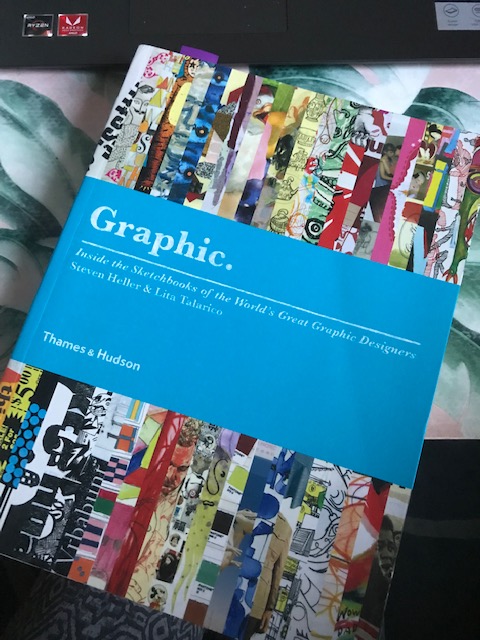
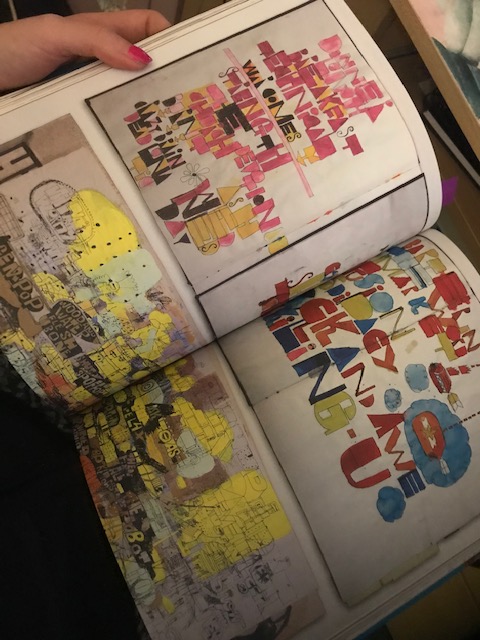
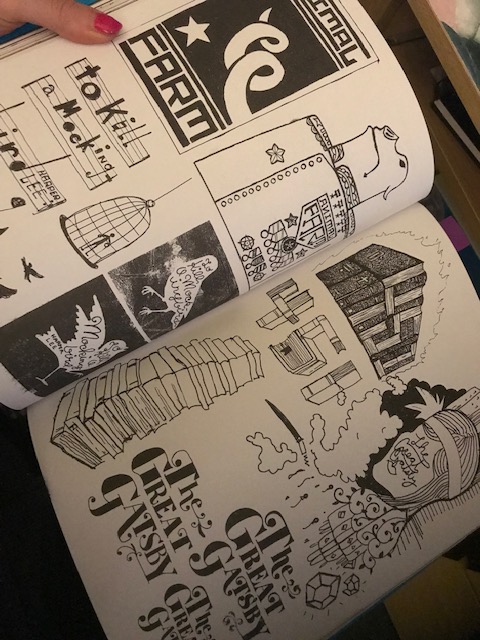
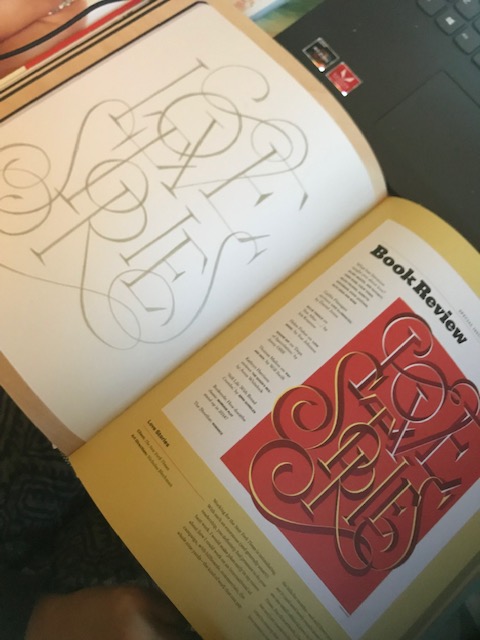
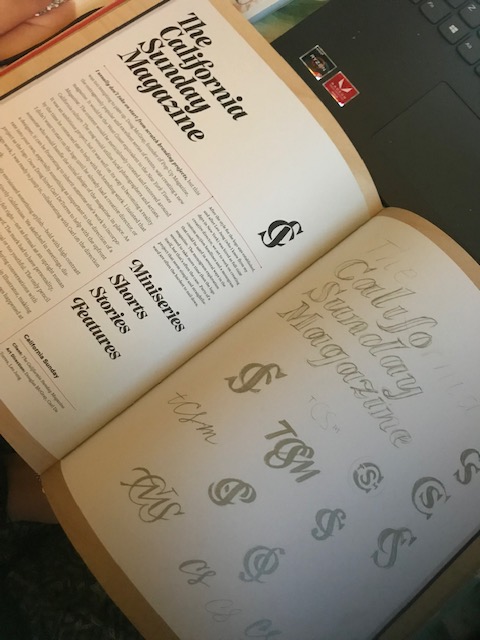
I like looking through peoples sketches and drawings and understanding different ideas, concepts and mindsets so this was the perfect book to have a look at. It is mostly all pictures from various artists sketchbooks, there is a short bio on each artist or designer and then just an insight into their work.
When I first enrolled onto this course I was apprehensive about what my sketchbooks should look like and include; that is why I took a look at this book. This book is purely illustrative and raw ideas at their initial idea stages. This is the kind of style I am interested in; raw artwork which can then be taken and developed further into a final outcome.
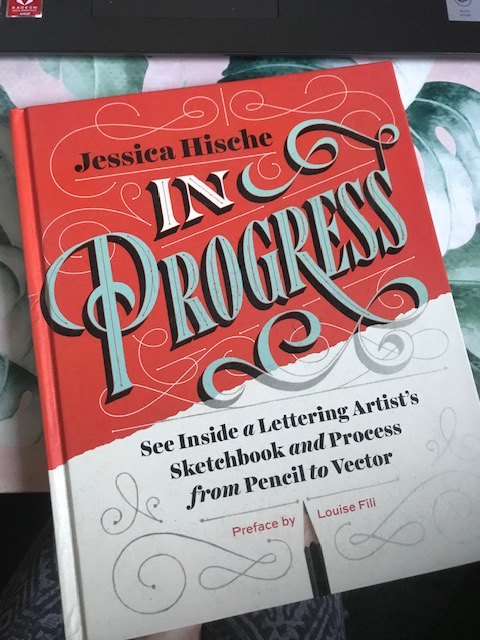
I am pretty old school in regards to that I much prefer hand drawing to digital work; as much as I do love digital work, my strongest area is definitely hand drawn. I have always liked hand lettering and when I listened to a design podcast with Jessica Hische I knew I had to take a look at her book.
Although a lot of what she mentions in the book in regards to Illustrator I am already familiar with, I like looking at the different lettering styles and the projects which she has worked on. It is a great source for inspiration and ideas.








 pinkangeleno.com